Showing posts with label Taxonomy. Show all posts
Showing posts with label Taxonomy. Show all posts
Sunday, September 20, 2015
Taxonomy with R: Exploring the Taxize-Package
 First off, I'd really like to give a shout-out to the brave people who have created and maintain this great package - the fame is yours!
So, while exploring the capabilities of the package some issues with the ITIS-Server arose and with large datasets things weren't working out quite well for me.
I then switched to the NCBI API and saw that the result is much better here (way quicker, on first glance also a higher coverage).
At the time there is no taxize-function that will pull taxonomic details from a classification returned by NCBI, that's why I plugged together a little wrapper - see here:
# some species data:
spec <- data.frame("Species" = I(c("Bryum schleicheri", "Bryum capillare", "Bryum argentum", "Escherichia coli", "Glis glis")))
spl <- strsplit(spec$Species, " ")
spec$Genus <- as.character(sapply(spl, "[[", 1))

# for pulling taxonomic details we'd best submit higher rank taxons
# in this case Genera. Then we'll submit Genus Bryum only once and
# save some computation time (might be an issue if you deal
# with large datasets..)

gen_uniq <- unique(spec$Genus)

# function for pulling classification details ("phylum" in this case)
get_sys_level <- function(x){ require(taxize)
                              a <- classification(get_uid(x))
                              y <- data.frame(a[[1]])                                        # if there are multiple results, take the first..
                              z <- tryCatch(as.character(y[which(y[,2] == "phylum"), 1]),    # in case of any other errors put NA
                                            error = function(e) NA)
                              z <- ifelse(length(z) != 0, z, NA)                             # if the taxonomic detail is not covered return NA
                              return(data.frame(Taxon = x, Syslevel = z))
                             }

# call function and rbind the returned values
result <- do.call(rbind, lapply(gen_uniq, get_sys_level))
print(result)
#         Taxon       Syslevel
# 1       Bryum   Streptophyta
# 2 Escherichia Proteobacteria
# 3        Glis       Chordata

# now merge back to the original data frame
spec_new <- merge(spec, result, by.x = "Genus", by.y = "Taxon")
print(spec_new)
#         Genus           Species       Syslevel
# 1       Bryum Bryum schleicheri   Streptophyta
# 2       Bryum   Bryum capillare   Streptophyta
# 3       Bryum    Bryum argentum   Streptophyta
# 4 Escherichia  Escherichia coli Proteobacteria
# 5        Glis         Glis glis       Chordata
#

So, What Are You? ..A Plant? ..An Animal? -- Nope, I'm a Fungus!
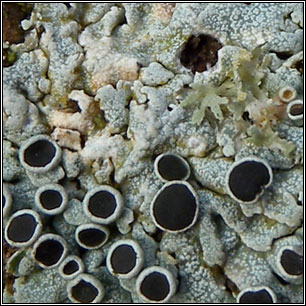
Lately I had a list of about 1000 species names and I wanted to filter out only the plants as that is where I come from. I knew that Scott Chamberlain has put together the ritis package which obviously can do such things. However, I knew of ITIS before and was keen to give it a shot..
Here's what I've come up with (using the ITIS API, updated on 11. Dec 2012, previous version had a flaw with indefinite matches.. Should be ok now. However, there are of course species that are not covered by the database, i.e. Ixodes, see below):
library(XML)
get_tsn <- function(sp_name) {
           require(XML)
           units <- tolower(unlist(strsplit(sp_name, " ")))

           # valid string?
           if (length(units) > 2) { stop("...No valid search string submitted (two words seperated by one space)!") }

           itis_xml <- htmlParse(paste("http://www.itis.gov/ITISWebService/services/ITISService/searchByScientificName?srchKey=",
                                       sp_name, sep=""))
           tsn <- xpathSApply(itis_xml, "//tsn", xmlValue)
           unitname1 <- tolower(gsub("\\s+", "", xpathSApply(itis_xml, "//unitname1", xmlValue)))
           unitname2 <- tolower(gsub("\\s+", "", xpathSApply(itis_xml, "//unitname2", xmlValue)))
           unitname3 <- tolower(gsub("\\s+", "", xpathSApply(itis_xml, "//unitname3", xmlValue)))

           # sp_name = only Genus, get tsn were sp_name matches perfectly and unitname2 (lower level taxon) is absent
           if (length(units) == 1) {
               return(tsn[tolower(sub("\\s+", "", unitname1)) == tolower(sp_name) & unitname2 == ""]) }

           # sp_name = Genus and Epitheton, get tsn where both match perfectly and unitname3 (lower level taxon) is absent
           if (length(units) == 2) {
               return(tsn[unitname1 == units[1] &
                          unitname2 == units[2] &
                          nchar(unitname3) == 0]) }
           }

get_kngdm <- function(tsn) {
                   kngdm <- xpathSApply(htmlParse(paste("http://www.itis.gov/ITISWebService/services/ITISService/getKingdomNameFromTSN?tsn=",
                                                       tsn, sep="")),
                                                  "//kingdomname", xmlValue)
           return(kngdm)
           }

get_tsn_kngdm <- function(x) {y = get_tsn(x)
                              z = get_kngdm(y)
                              return(list(Name = x, TSN = y, Kingdom = z))
                              }

# I had some API-related errors (I guess it was mysteriously not answering in
# some cases). I couldn't resolve this and thus implemented tryCatch
get_tsn_kngdm_try <- function(x) tryCatch(get_tsn_kngdm(x), error = function(e) NULL)

sp_names <- c("Clostridium", "Physcia", "Ixodes", "LYNX", "Homo sapiens", "Canis lupus")

system.time(result <- data.frame(do.call(rbind, lapply(sp_names, FUN = get_tsn_kngdm_try))))
result

system.time(result <- data.frame(do.call(rbind, lapply(sp_names, FUN = get_tsn_kngdm_try))))
#
# result
#        User      System verstrichen
#        1.54        0.01       33.66
#           Name    TSN  Kingdom
# 1  Clostridium 555645   Monera
# 2      Physcia  14024    Fungi
# 3        Viola  22030  Plantae
# 4       Ixodes
# 5         LYNX 180581 Animalia
# 6 Homo sapiens 180092 Animalia
# 7  Canis lupus 180596 Animalia
#
Subscribe to:
Posts (Atom)